Category
AI Coding Agents
AI coding agents do more than suggest the next line. You give them a goal — “fix this failing test”, “migrate this module” — and they read the codebase, plan, edit files, run commands and tests, and often open a pull request. Some run in your terminal, others in cloud sandboxes that keep working after you close your laptop. This category also covers prompt-to-app builders, whose agents generate and host whole applications.
How to choose:
- Where it runs: a local terminal agent sees your environment; a cloud agent works in parallel but needs repository access and a sandbox you trust.
- Permissions and safety: look for approval modes, command allow-lists and clear audit trails before letting an agent run unattended.
- Model access and limits: check which models the agent can use and how usage limits or API costs behave in long sessions.
- Integration: IDE extensions, Git hosting and CI support decide how well an agent fits your existing workflow.
- Code ownership (app builders): check Git sync, export and how tied the app is to the builder’s hosting before an experiment becomes production.
Our reviews: Claude Code, OpenAI Codex, Replit, Lovable, Bolt.new, v0, Cline, Amp, Warp, Factory, Aider, Ellipsis.
AI Coding Agents reviews at a glance
Listed alphabetically: this is not a ranking. Our ranked picks are in the Top 10. “Best for” and strengths come from each review and its cited sources.
Aider
Best for: Terminal-first developers who want a free, open-source agent, their own choice of model and every AI edit committed to git.
- Free and open source under Apache 2.0.
- Works with most LLMs, including OpenAI, Anthropic, Gemini, DeepSeek, xAI, Amazon Bedrock, Vertex AI, OpenRouter, Ollama, LM Studio and any OpenAI-compatible API.
- Git-native.
Amp
Best for: Teams that want parallel cloud agents and multi-model routing, and that can reuse existing ChatGPT or Claude subscriptions.
- A free Hobby tier with no Amp token fees when you bring a ChatGPT or Claude subscription or your own API keys.
- Multi-model routing through the Dial (low, medium, high, ultra), plus Oracle, Librarian and Search subagents.
- Orbs give each thread its own cloud machine.
Bolt.new
Best for: Developers and small teams who want to scaffold, host and iterate on JavaScript web apps fast while keeping the code in GitHub.
- Two-way GitHub sync with automatic commits, branches and import of existing repositories.
- Built-in hosting on bolt.host, plus Bolt Database with authentication, file storage and server functions.
- Unused tokens on paid plans roll over for one extra month, and publishing with the Publish button uses no tokens.
Claude Code
Best for: Developers and teams committed to Claude models who want one agent across terminal, IDE, cloud and CI with strong admin controls.
- Runs in the terminal, VS Code and Cursor, JetBrains, desktop, browser, mobile, Slack and CI.
- Deep customization shared across every surface: CLAUDE.md (or an existing AGENTS.md), skills, hooks, plugins and MCP servers.
- Cloud sessions, Routines and pull request auto-fix keep working after you close your laptop, with no separate VM charge.
Cline
Best for: Developers who want an open-source agent in their editor or terminal and the freedom to choose any model provider, including local models.
- Open-source (Apache-2.0) agent with no seat fee for individual developers.
- Works with nearly any provider, including local and open-weight models.
- Human-in-the-loop by default, with Plan and Act modes and checkpoints that make agent work reversible.
Ellipsis
Best for: GitHub teams that want Claude Code or Codex running in the background with budgets, scoped credentials and audit logs.
- Agents, environments and code reviewers are defined in YAML and deployed through normal pull request review.
- Detailed spend controls, with caps per session, per agent, per developer and per account.
- Scoped short-lived credentials, no source retention after a session, and a full audit trail.
Factory
Best for: Engineering teams that want one model-agnostic agent platform across coding, PR review, docs and CI, with strong governance.
- One agent across the desktop app, CLI, SDKs, web, Slack, Teams, Jira, Linear and GitHub or GitLab CI.
- Model choice: Anthropic, OpenAI, Google and open-weight models, an automatic Factory Router, and BYOK for your own keys or local models.
- Strong governance: SSO, SCIM, zero data retention, audit logs, permission rules, sandboxing and airgapped deployment on higher tiers.
Lovable
Best for: Startups and product teams that want a hosted full-stack web app with auth, a database and a Git repo from day one.
- Two-way Git sync on all plans, with GitHub, GitLab and Bitbucket Cloud.
- A built-in backend (Lovable Cloud) with database, auth, storage, edge functions, secrets and scheduled jobs.
- An automatic Quick scan on every publish and an on-demand Deep scan, both free to run.
OpenAI Codex
Best for: ChatGPT subscribers who want an open-source CLI, editor integration and parallel cloud tasks without another subscription.
- Included in every ChatGPT plan, from Free and Go up to Pro, Business and Enterprise, and usable with an API key.
- Open-source CLI (Apache-2.0) with documented sandbox modes and approval policies.
- Codex Cloud runs tasks in parallel, each in its own workspace, and can open pull requests.
Replit
Best for: Builders who want an AI agent plus a full cloud workspace, many languages, databases and hosting in one place.
- A full cloud workspace with a shell, Nix-managed packages and a Git pane with GitHub integration.
- Four deployment types (Autoscale, Static, Reserved VM, Scheduled) with custom domains.
- Separate development and production databases; development databases are free.
v0
Best for: Teams already on Vercel and Next.js who want AI-built changes to arrive as branches, previews and pull requests.
- Branch-per-chat workflow with preview deployments and PR-based publishing; v0 never pushes directly to main.
- Imports existing GitHub repositories into a sandbox VM that detects Next.js, Vite and generic Node.js projects.
- Published per-model token rates, with monthly credits that roll over for up to 65 days.
Warp
Best for: Terminal-heavy developers and teams who want agents that run real commands, plus a path to cloud automation.
- One app for the terminal, a built-in agent, code review of agent diffs and third-party CLI agents.
- Broad model choice across OpenAI, Anthropic, Google, xAI and open-weight models, plus bring-your-own-key for some providers.
- The client is open source (AGPL v3, with MIT-licensed UI crates) and runs on macOS, Windows and Linux.
All 12 AI Coding Agents articles
-
 Review
Warp Review (2026): Terminal, Coding Agent and Agent Factories
Read review →: Warp Review (2026): Terminal, Coding Agent and Agent FactoriesWarp in October 2026: an open-source terminal with a built-in agent, support for CLI agents, cloud agents and Factories, and plans from free to $200/month.
-
 Review
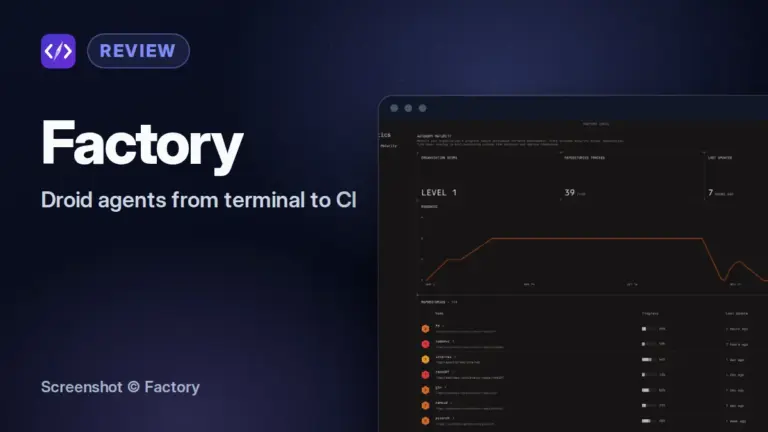
Factory Review (2026): Droid Agents From Terminal to CI
Read review →: Factory Review (2026): Droid Agents From Terminal to CIFactory’s Droids in October 2026: one agent across CLI, desktop, Slack and CI, multi-model routing, plans from $20/month, and the trade-offs.
-
 Review
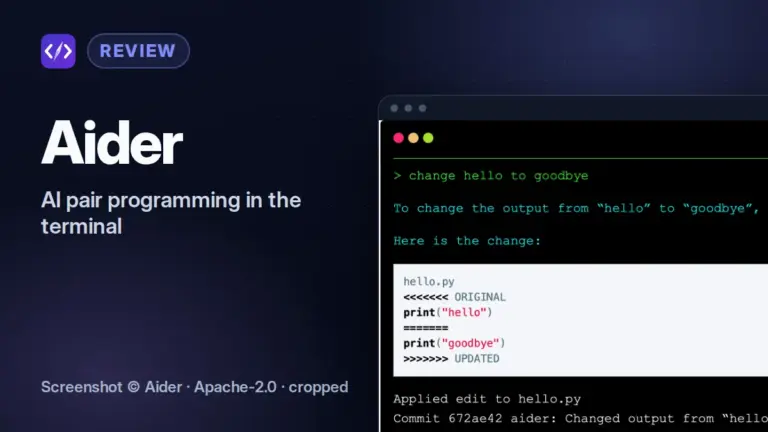
Aider Review (2026): Open-Source AI Pair Programming in Your Terminal
Read review →: Aider Review (2026): Open-Source AI Pair Programming in Your TerminalAider in October 2026: a free, open-source terminal pair programmer with git-native edits, any LLM, a repo map, and a slowing release pace.
-
 Review
Ellipsis Review (2026): Cloud Coding Agents and AI Code Review as Code
Read review →: Ellipsis Review (2026): Cloud Coding Agents and AI Code Review as CodeEllipsis in October 2026: run Claude Code and Codex agents in cloud sandboxes from YAML, with budgets, audit logs, PR review and usage-based pricing.
-
 Review
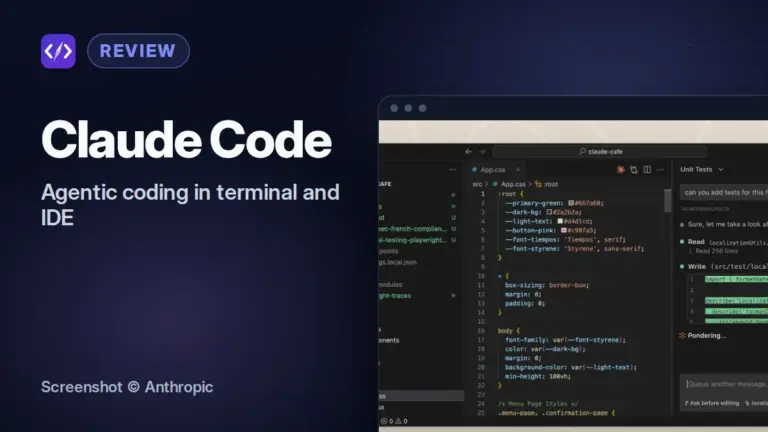
Claude Code Review (2026): Anthropic’s Coding Agent, Limits and Pricing
Read review →: Claude Code Review (2026): Anthropic’s Coding Agent, Limits and PricingClaude Code in October 2026: terminal, IDE, desktop and cloud agent, Opus 5.5 default, plans from $20/month, and the usage-limit trade-offs.
-
 Review
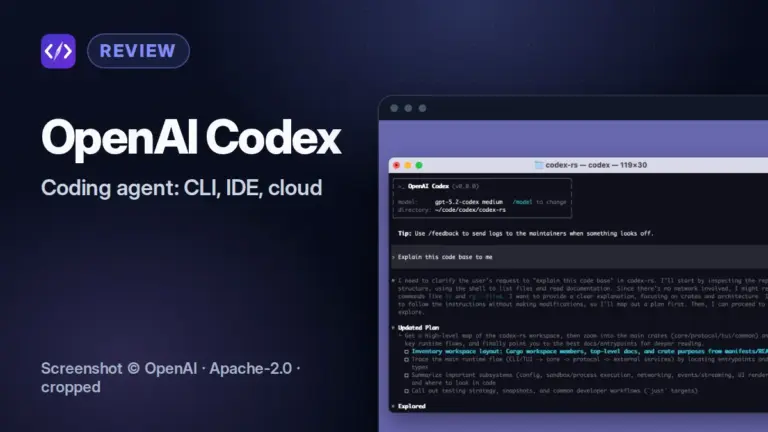
OpenAI Codex Review (2026): CLI, IDE Extension and Cloud Agent
Read review →: OpenAI Codex Review (2026): CLI, IDE Extension and Cloud AgentOpenAI Codex in October 2026: open-source CLI, IDE extension and Codex Cloud, GPT-6.1 Sol, plans from free to $500/month, and its usage limits.
-
 Review
Replit Review (2026): Is Replit Agent Worth It for Developers?
Read review →: Replit Review (2026): Is Replit Agent Worth It for Developers?Replit and Replit Agent review for developers: effort-based pricing, Free Mode, Git and export, deployments, databases and security scans (Oct 2026).
-
 Review
Lovable Review (2026): Is the Full-Stack AI App Builder Worth It for Developers?
Read review →: Lovable Review (2026): Is the Full-Stack AI App Builder Worth It for Developers?Lovable review for developers: credit pricing, Git sync, code export, Lovable Cloud lock-in, security scans and the 2026 incidents, as of October 2026.
-
 Review
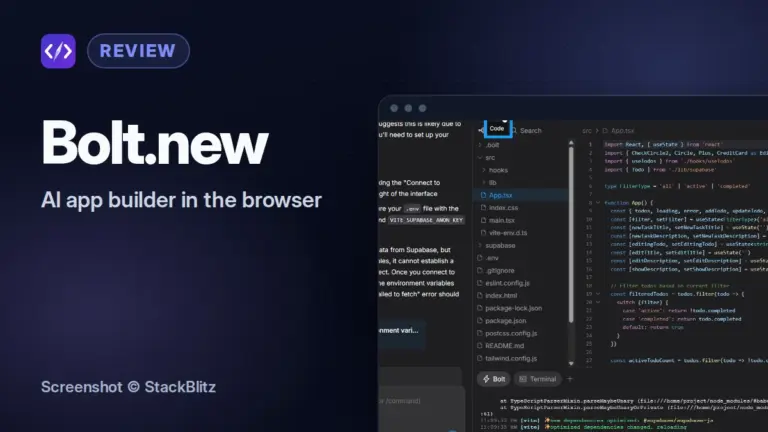
Bolt.new Review (2026): Is StackBlitz’s AI App Builder Developer-Friendly?
Read review →: Bolt.new Review (2026): Is StackBlitz’s AI App Builder Developer-Friendly?Bolt.new review for developers: token pricing, two-way GitHub sync, Bolt Cloud hosting and database, security audits and lock-in, as of October 2026.
-
 Review
v0 Review (2026): Is Vercel’s AI App Builder Right for Your Team?
Read review →: v0 Review (2026): Is Vercel’s AI App Builder Right for Your Team?v0 by Vercel review for developers: token-based credits, branch-per-chat Git workflow, Vercel deployment, sandbox, security and lock-in (Oct 2026).
-
 Review
Cline Review (2026): The Open-Source, Model-Agnostic Coding Agent
Read review →: Cline Review (2026): The Open-Source, Model-Agnostic Coding AgentCline in October 2026: open-source agent for VS Code, JetBrains, CLI and desktop. Bring your own model, ClinePass at $9.99, and the trade-offs.
-
 Review
Amp Review (2026): Multi-Model Coding Agent With Cloud Orbs
Read review →: Amp Review (2026): Multi-Model Coding Agent With Cloud OrbsAmp in October 2026: multi-model coding agent with cloud orbs, a free tier when you bring your own model access, $20 and $200 tiers, and trade-offs.